
Safe driving requires the ability to read and respond to signs and signals on the road. Navigating today’s content-rich media and AI landscape requires the same skill: the ability to analyze and evaluate messages in all forms.
That’s media literacy.
While media literacy has existed as an academic discipline since the late 1970s, by 2013 it was still largely confined to classroom settings. Despite growing awareness, media literacy education often remained academic in delivery, creating a gap between what students needed and what actually engaged them.
As someone fluent in both media literacy and hip-hop culture, I saw a clear disconnect when the two met in the classroom. Educators were committed to equipping students with critical thinking skills. But many young people across backgrounds felt disengaged from how those skills were being taught. The issue wasn’t the importance of media literacy; it was how it was being delivered.
The missing bridge between education and engagement?
Culture.
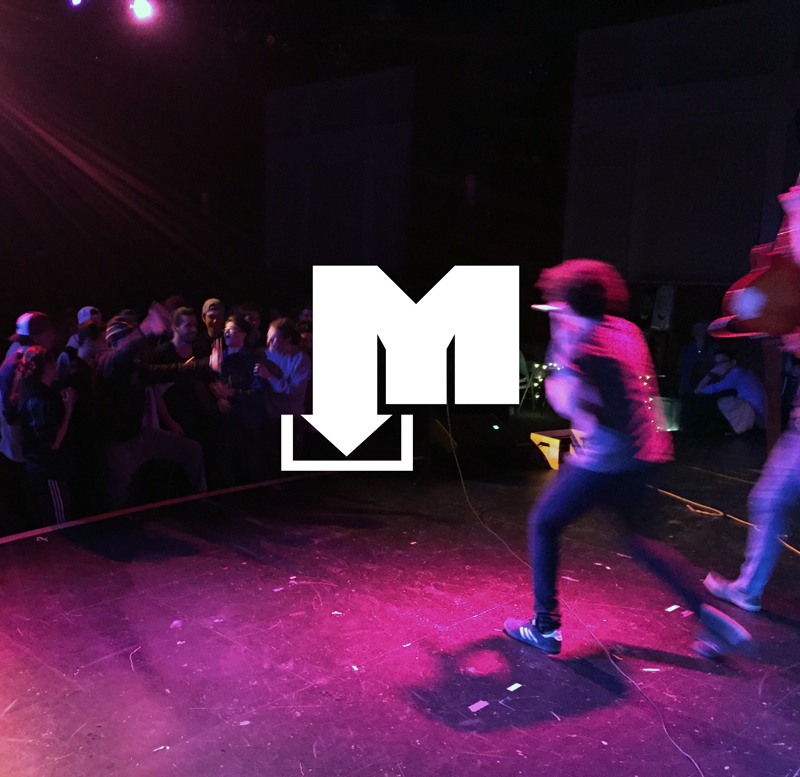
I created The Message, a media literacy education initiative that prioritized culture, community, and mindset development in addition to skill building. It launched with Message Tour, the world’s first live music show promoting media literacy. With its mix of concert + inspirational talk, Message Tour delivered an immersive media literacy education experience that met high schoolers where they were, physically and culturally.
Message Tour was followed up by Message Academy, a full media literacy curriculum and class that helps youth (grades 8-12) develop critical thinking, self-awareness, and empathy.
Message Academy extends the learning over the course of a semester or school year, embedded in schools as an enrichment or afterschool offering. Academy sessions bring raw conversations on media, identity, and mental health that feel more like conversations with friends, than didactic lectures.
The Message reached thousands of students at schools and youth-serving venues in the United States in Canada with our culture-based approach to media literacy education.
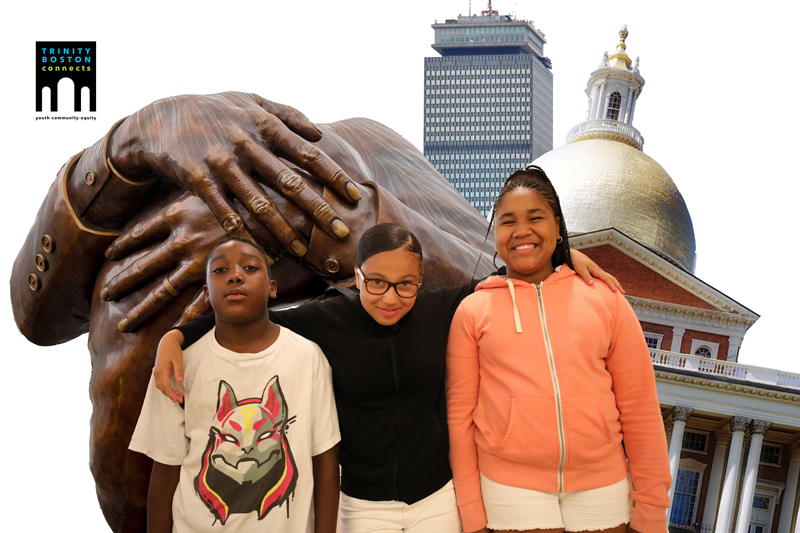
Trinity Boston Connects (TBC) is a nonprofit advancing racial equity through healing for youth of color in Boston. As a non-sectarian affiliate of Trinity Church, a historic institution known for its community leadership, TBC carried a strong legacy plus over 20 years of independent impact.
The organization began a rebrand to Trinity Boston Connects from Trinity Boston Foundation while simultaneously transitioning leadership, as its founding executive director retired and a new leader stepped in.
TBC was doing powerful work across five distinct programs, but they hadn’t been designed or communicated as a cohesive system.
As a result, their messaging lacked clarity and focus, and their brand no longer reflected the quality or depth of their impact.
This is a common challenge for mission-driven organizations: as vision expands, coherence can deteriorate.
For TBC, success depended on more than a visual refresh. It required aligning their story across programs, leadership, and legacy in a way that could resonate with multiple stakeholders while honoring their history.
I approached the work as a refinement, and not a reinvention. My focus was strengthening what was already working while bringing clarity and cohesion to the whole. It was about reinforcing weakened fixtures, clearing out old debris, and building on a strong foundation.
I partnered with senior leadership and their design firm to guide the logo redesign, then extended that foundation into a unified visual system across key touchpoints, including their website, promotional materials, pitch decks, and newsletters.
With limited resources for the rebrand launch, I developed a strategy rooted in TBC’s greatest strength: community. We hosted an intimate “Living Room Announcement” via Facebook Live, where staff shared the organization’s new direction and engaged directly with their audience in real time.
Over a multi-year engagement, this work supported:
The Lemelson Foundation is a leading funder of invention education in the United States, with a mission to improve lives through invention. In partnership with MIT, they support thousands of youth across the country who are, or might be, interested in invention.
Their data shows that girls, racial and ethnic minorities, and youth from low-income backgrounds are significantly less likely to pursue invention. These groups are often referred to as the “Lost Einsteins,” representing untapped potential in innovation and economic mobility.
While research pointed to lack of exposure as a key factor, most efforts to address this gap focused on increasing access to programs or education. What was less understood was how young people actually perceive invention, and whether they see themselves in it at all.
I partnered with the Lemelson Foundation to help answer that question and inform a national campaign strategy aimed at building a stronger pathway to invention for these young people.
Exposure alone isn’t enough. Perception shapes participation. Our research revealed a clear disconnect between how young people see themselves and how they see inventors.
Many associated inventors with being “geeky,” socially isolated, and overwhelmingly male and white: identities that felt distant from their own lived experience.
At the same time, the majority of respondents described themselves as creative, social, and collaborative, traits they didn’t associate with invention.
This gap wasn’t about ability. It was about identity. If young people couldn’t see themselves in invention, they were far less likely to pursue it regardless of access or opportunity.
I led a multi-phase research initiative to better understand how invention-related knowledge, attitudes, behaviors, and intentions are formed among adolescents.
I worked closely with the Foundation’s Communications Director and engaged senior leadership throughout the process, shaping the work in alignment with their broader campaign goals. I sub-contracted a research scientist to lead the technical design and analysis, while I project managed the process and helped shape the survey through my lens as a practitioner working at the intersection of youth, media, and culture.
The work included:
The survey reached over 600 adolescents and explored not just awareness of invention, but how young people see themselves, who influences them, and how media shapes their aspirations.
This allowed us to move beyond assumptions and identify culturally relevant entry points for engagement.
This work directly informed the Foundation’s direction for a national inspiration campaign aimed at engaging underrepresented youth. It translated research into a clear strategic framework that:
It also established a foundation for connecting invention to a broader range of identities, interests, and real-world pathways.
Design Squad Global (DSG) is a PBS Kids show produced by GBH, the nation’s largest PBS content provider. The show introduces young people to engineering as a tool for solving real-world problems in their communities, highlighting stories of youth around the world building creative solutions, from clean water systems to homemade propulsion devices.
While the mission was strong, GBH saw an opportunity to deepen DSG’s appeal and engagement with youth audiences, and bring new energy to the series.
I partnered with a local production company of GBH’s choosing to write and co-produce a theme song and music video for the show.
The writing process involved multiple rounds of review with the Design Squad Global team and production partners, sometimes leaning toward a more formal, institutional tone. I worked to maintain a voice that felt culturally relevant, ensuring the final product felt like authentic expression rather than formal education.
To reflect DSG’s global footprint, we collaborated with a South African singer who had appeared on The Voice South Africa. Together, we translated the chorus into Zulu, with me performing the English version alongside her Zulu translation.
The production incorporated Zulu musical elements, resulting in a song that was both musically and lyrically multinational.
I partnered with a local production company of GBH’s choosing to write and co-produce a theme song and music video for the show.
The writing process involved multiple rounds of review with the Design Squad Global team and production partners, sometimes leaning toward a more formal, institutional tone. I worked to maintain a voice that felt culturally relevant, ensuring the final product felt like authentic expression rather than formal education.
To reflect DSG’s global footprint, we collaborated with a South African singer who had appeared on The Voice South Africa. Together, we translated the chorus into Zulu, with me performing the English version alongside her Zulu translation.
The production incorporated Zulu musical elements, resulting in a song that was both musically and lyrically multinational.
Engineer Our Tomorrow became the official theme song of Design Squad Global, extending the show’s reach beyond its episodes into a culturally relevant, shareable format.
Released on DSG’s YouTube channel (1M+ subscribers), the song and video gave the series a unifying expression of its mission. It celebrates youth ingenuity and engineering across cultures around the world.